
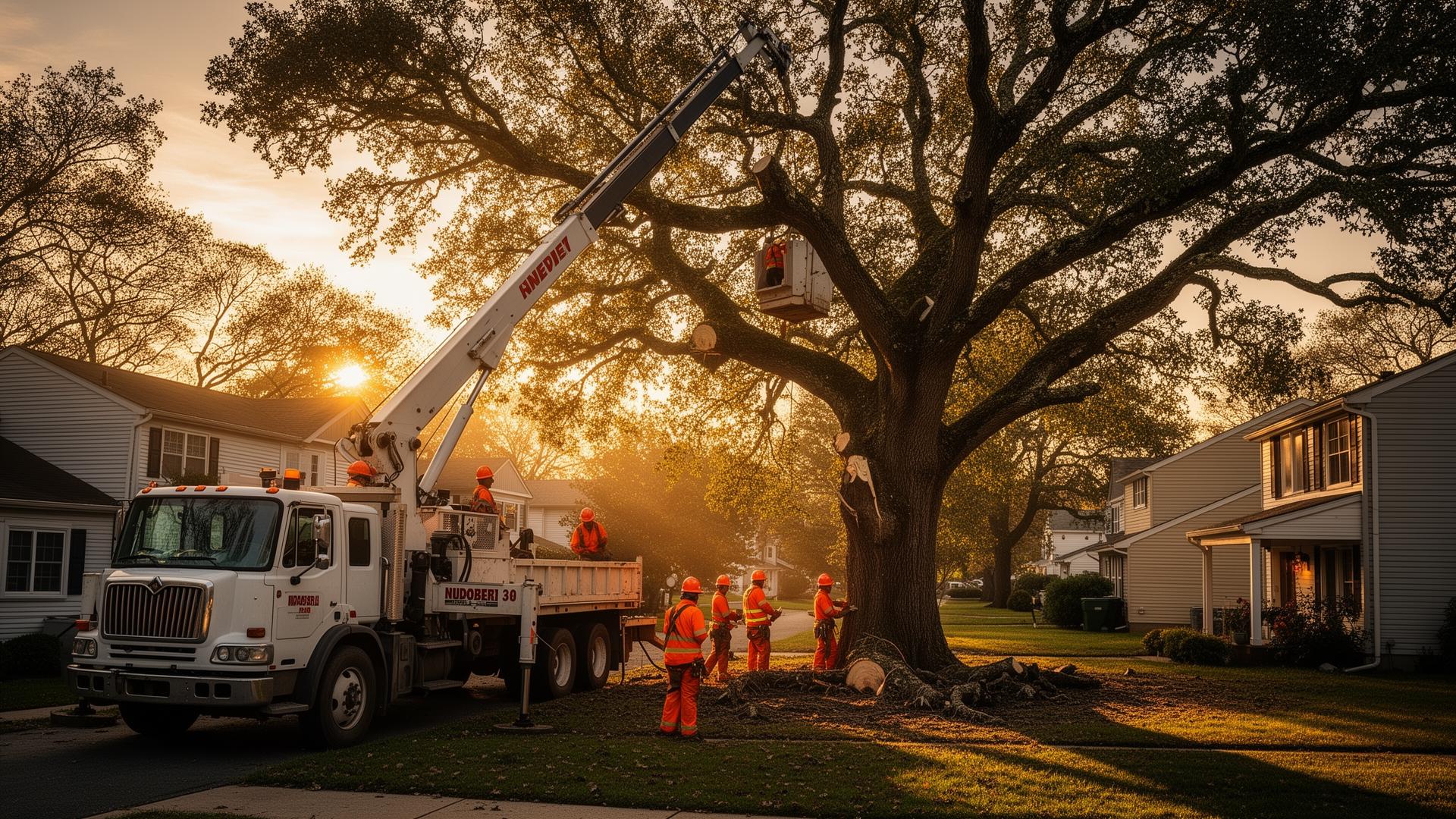
Trimming is the single best investment you can make in the long-term health and safety of your trees. Pine Grove follows ANSI A300 pruning standards on every job — meaning the right cut, in the right place, at the right time of year. From a single overhanging oak limb in Cherry Hill to a 40-property HOA route in Marlton, we deliver clean, professional results.
Safety pruning
We remove dead, broken, and weakly attached limbs before they become a liability. This is the single most cost-effective service we offer for protecting roofs, vehicles, and people.
Structural pruning
Younger trees pruned correctly grow into strong, balanced specimens that need far less corrective work later. We train co-dominant leaders, reduce included bark unions, and establish proper branching architecture.
Canopy thinning & reduction
Selective thinning improves airflow and light penetration without topping. Reduction pruning brings overgrown crowns back into scale with your property — without the long-term damage that topping causes.
Commercial & HOA programs
We run monthly and seasonal maintenance contracts for community associations, apartment complexes, office parks, and retail centers throughout South Jersey. Predictable scheduling, consolidated billing, and crews trained in tenant-friendly site protocols.
Why Pine Grove
Family-owned, fully insured, and locally rooted in South Jersey. Every job gets a written estimate, an experienced foreman, and a clean site at the end of the day.
Frequently asked questions
When is the best time to trim trees in New Jersey?+
Most deciduous trees are best pruned during dormancy (late fall through early spring). Dead and hazard limbs can — and should — be removed any time of year.
Do you top trees?+
No. Topping permanently damages trees and creates unsafe regrowth. We use proper crown reduction techniques instead.
How often should trees be pruned?+
Most mature trees benefit from a professional pruning cycle every 3–5 years. Young trees do best on a 2–3 year structural pruning schedule.